A tread that does not move, crack or warp
Our stair treads are engineered wooden stair planks: a stable plywood core with a solid wood top layer. That is the plus one in every staircase that leaves our workshop.
- Up to 30 cm wide from one piece
- Stable in any indoor climate
- Only the necessary thickness of fine hardwood
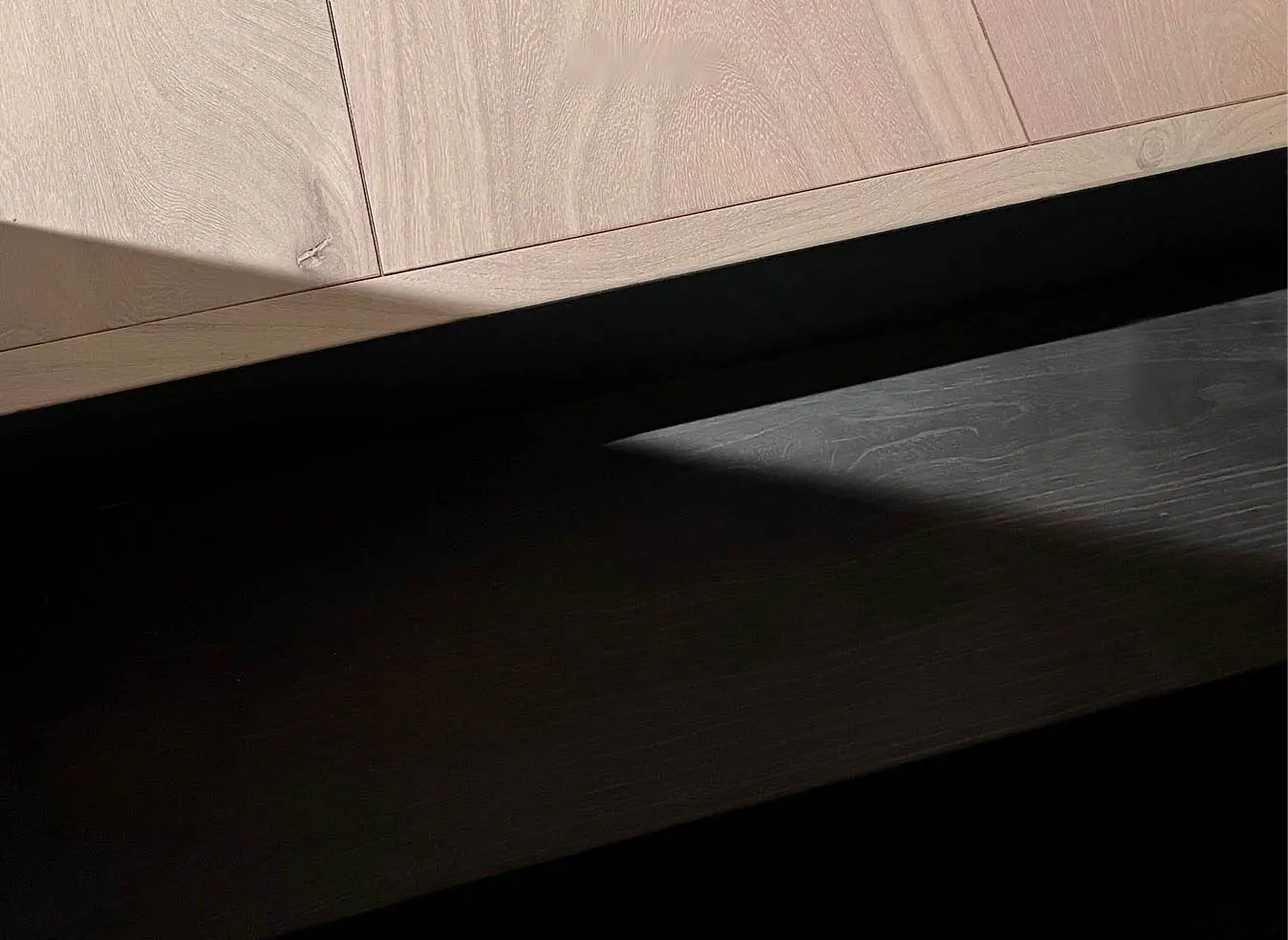
Solid top layer on a plywood core
The stair plank consists of a stable plywood core with a solid wood top layer. That construction gives more stability, makes wider and longer planks possible and is more sustainable than fully solid stair planks.
- Stable. Solid treads can warp or crack as the wood shrinks and swells. This build-up barely moves, after correct installation in a healthy indoor climate.
- Wider from one piece. Up to 30 cm wide from a single piece of top layer, so that the grain runs on unbroken.
- Sustainable. Only the strictly necessary thickness of fine hardwood, from sustainably managed forests.
- Seamless. Treads joined to each other with tongue and groove.
Four strengths of our stair plank
Aesthetics, stability, sustainability and colour: what the plus one means for your staircase.
Aesthetics of the top layer
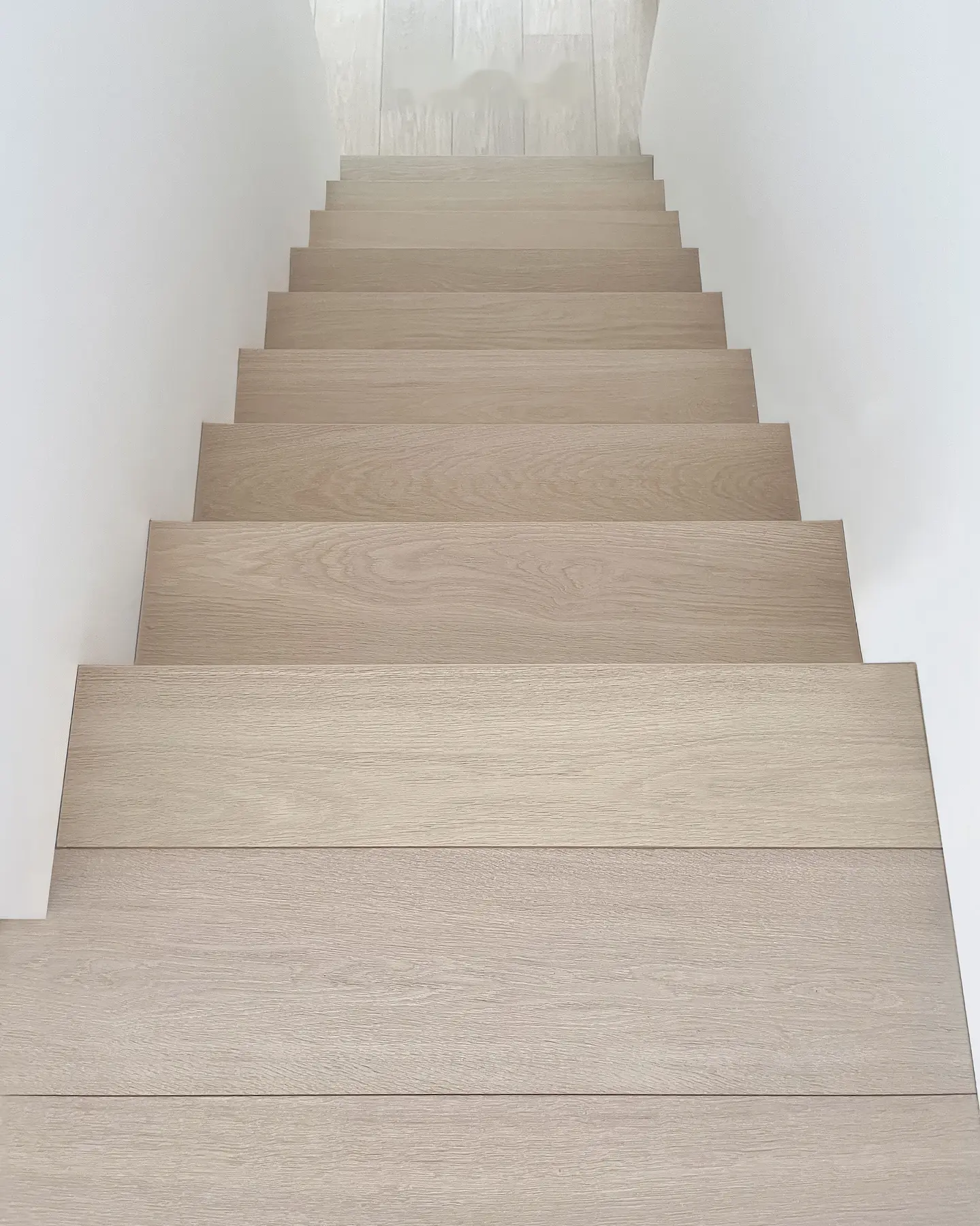
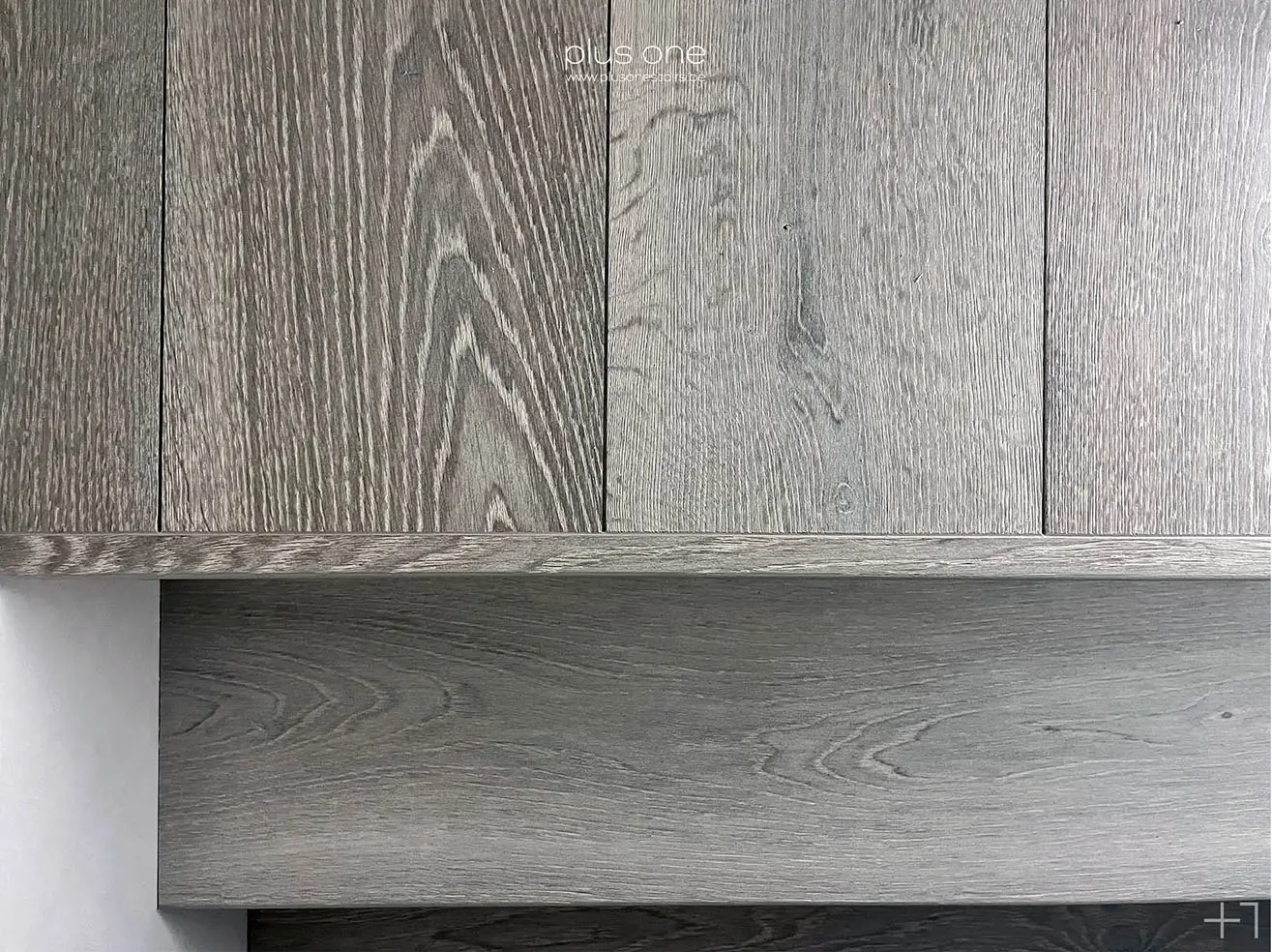
A solid wood top layer up to 30 cm wide from a single piece, so that the grain runs on unbroken from tread to tread. Treads joined to each other with tongue and groove, for seamless mitres.
Stability
Fully solid treads can warp or crack as the wood shrinks and swells. The plywood core keeps the tread true to shape: after correct installation in a healthy indoor climate it barely moves.
Sustainability
Only the strictly necessary thickness of fine hardwood is used for the top layer, from sustainably managed forests. Beautiful, and with a minimal impact on the environment.
Colours
The same plank, two routes to the colour: one of the six standard colours on oak or beech, or The Perfect Match, where we match the finish to your parquet and interior.
Seamless down to the smallest detail
The treads are joined to each other with a tongue-and-groove joint, for a seamless end result. The stair planks are available up to 30 cm wide from a single piece of top layer, so that the grain comes fully into its own. Every tread is unique, with its own story.
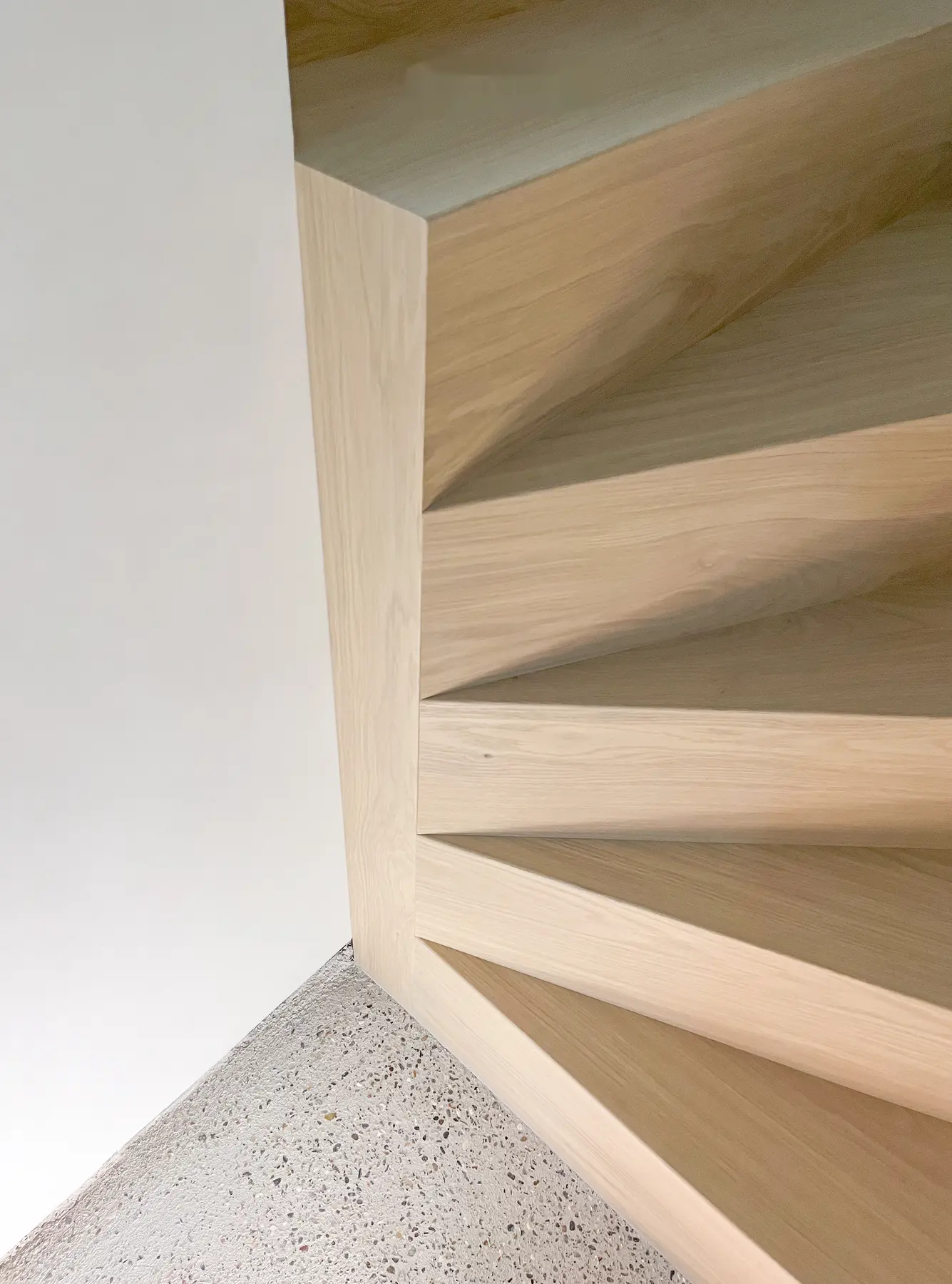
Wood grade
The engineered stair planks are available as standard in the grade bis rustiek A, which may contain small knots of up to 20 mm.
Colour
Choose one of the six standard colours on oak or beech, or have the finish matched to your floor with The Perfect Match: smoking, ageing, charring, lye-treating, oiling or lacquering.
Three kinds of stair plank side by side
Why we choose the engineered plank, at a glance. The same tread, three ways to make it.
Engineered “plus one” stair plank
A solid wood top layer, bonded to a stable plywood core. One tread is one continuous grain.
Laminated solid stair plank
Solid strips glued together into one plank. One tread is an assembly of several strips of wood.
Fully solid stair plank
One single piece of oak. Today we use it only in exceptional cases, for instance castle stairs with ornaments, precisely because this plank is less stable.
| Property | A Engineered “plus one” stair plank | B Laminated solid stair plank | C Fully solid stair plank |
|---|---|---|---|
| Durability | +++ | ++ | + |
| Stability | +++ | ++ | − |
| Standard colours | +++ | + | ++ |
| Colour match with your parquet floor | +++ | + | ++ |
| Aesthetics and grain | +++ | + | +++ |
| Budget | €€ | €€ | €€€ |
Rated by Plus One Stairs from its own workshop experience. More pluses is better; € shows the relative budget.
Questions about our stair plank
Can't find your question? Feel free to call or email us.
Is an engineered stair plank lower quality than solid wood?
What does bis rustiek A mean?
Which wood types are possible for the top layer?
Ready for the next step?
Briefly describe your project and what you have in mind. We will look at the options together, without obligation.
- Call us0491 41 23 18
- Email usinfo@plusonestairs.be
- AddressIndustrielaan 43 (loods 1)
8930 Menen